 Cart
Cart




Flame-resistant clothing is often described through a mix of certifications, test methods, and technical terminology. For operators and procurement teams, these labels can be difficult to interpret.
In this blog post:
- Why Flame-Resistant Standards Exist
- Material Behaviour vs Certified Protection
- How Flame-Resistant Clothing Is Tested
- Major Flame-Resistant Clothing Standards and Test Methods
- Understanding EN ISO 11612 Performance Codes
- US vs European FR Standards
- Antistatic Requirements in FR Clothing
- Flame Protection Works as a System
- Understanding Standards Helps You Choose Better Protection
Standards such as EN ISO 11612, NFPA 2112, and test methods like EN ISO 15025 or ASTM D6413 define how garments are evaluated against flame and heat hazards. Understanding what these standards measure—and what they do not—is essential when comparing flame-resistant clothing systems.
This guide explains how flame-resistant standards work, what the different tests evaluate, and how they relate to real-world tactical use.
If you are new to the topic, you may also want to start with our Ultimate Guide to FR Clothing, which explains the fundamentals of flame-resistant garments and materials.
Why Flame-Resistant Standards Exist
Protective clothing standards exist to ensure that garments behave predictably under defined hazards.
In environments where flash fires, explosions, or fuel ignition are possible, clothing must:
- resist ignition
- limit flame spread
- reduce heat transfer
- self-extinguish once the heat source is removed
Without standardized testing, performance claims would be difficult to verify or compare across different products. Standards therefore define repeatable laboratory test conditions that allow flame-resistant clothing systems to be evaluated consistently.
Material Behaviour vs Certified Protection
One of the most common sources of confusion in flame-resistant clothing is the difference between material behaviour and certified protection levels. For example, many tactical fabrics are described as No-Melt / No-Drip (NMND).
NMND refers to how a fabric behaves when exposed to flame. These materials may ignite and burn for a limited time, but they do not melt or drip molten polymer onto the skin. This behaviour can reduce certain injury risks, but it does not define a protective performance level. Flame-resistant certification standards evaluate how materials and garments perform against defined flame and heat hazards.
If you want a deeper explanation of this difference, see our article No-Melt No-Drip: Reality Check.
How Flame-Resistant Clothing Is Tested
Flame-resistant performance is evaluated at two different levels.
Material-Level Testing
Fabric tests examine how the material itself behaves when exposed to flame. These tests measure characteristics such as:
- ignition resistance
- flame spread
- after-flame time
- char length
- heat transfer
Fabric samples are typically tested under controlled laboratory conditions. These tests provide baseline information about material behaviour. However, they do not fully represent how garments perform when worn.
SUBSCRIBE TO UNLOCK OUR EXCLUSIVE CONTENT
Enter your email and get timely updates and relevant intel on tactical topics directly to your inbox.
You are signing up to receive updates via e-mail from which you can opt out at any time. Visit our privacy policy for more info.
Garment-Level Testing
Garment standards evaluate the complete clothing system rather than just the fabric. These evaluations consider factors such as:
- garment construction
- seams and closures
- layering systems
- air gaps between garments
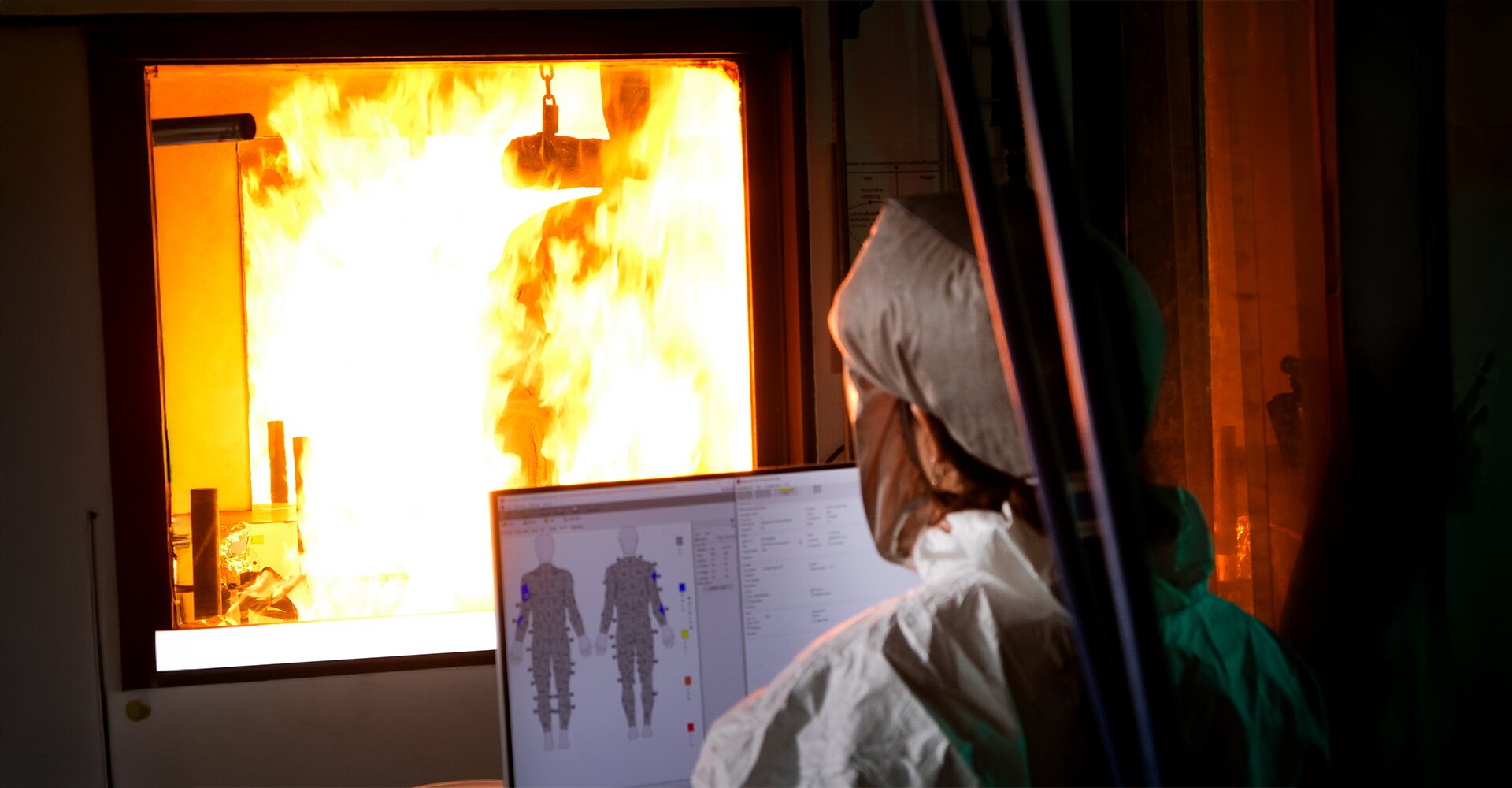
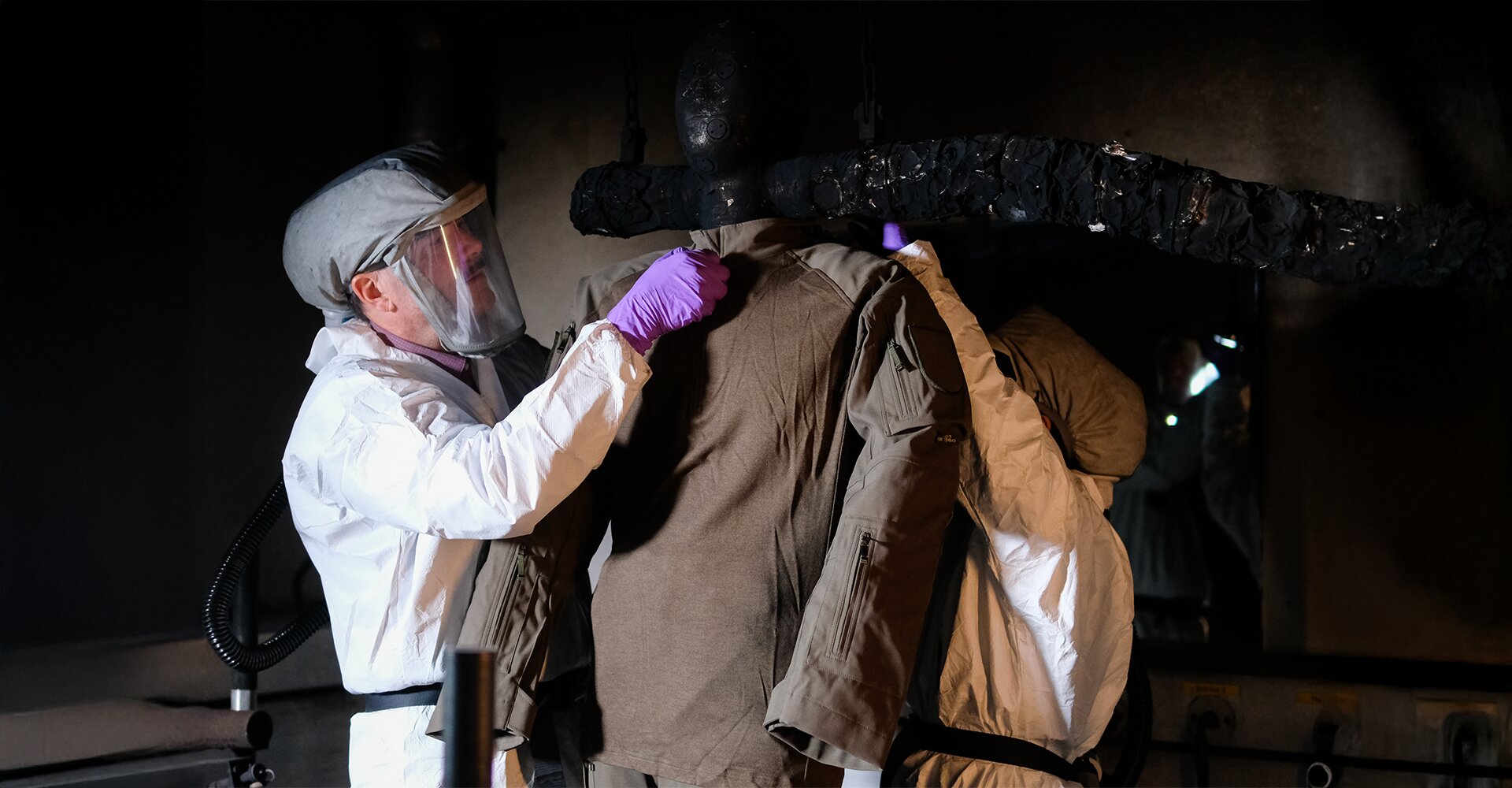
In some standards, additional testing is performed using instrumented thermal mannequins exposed to controlled fire conditions. Sensors across the mannequin measure heat transfer and predict burn injury levels. For a deeper look at these procedures, see our article Flame-Resistant Clothing Testing Methods.
Major Flame-Resistant Clothing Standards and Test Methods
Flame-resistant clothing is evaluated through a combination of garment certification standards and individual test methods. Certification standards define the overall level of protection required, while test methods measure specific aspects of material behaviour during flame exposure. The table below summarises the most commonly used standards and testing procedures.
| Standard / Test Method | Region | Type | What It Evaluates | Key Measurements | Used For |
|---|---|---|---|---|---|
| EN ISO 11612 | Europe / International | Garment standard | Protection against flame contact, convective heat, and radiant heat | Limited flame spread, convective heat transfer, radiant heat resistance | Widely used European certification for flame-resistant clothing |
| NFPA 2112 | United States | Garment certification standard | Protection against flash-fire exposure | Vertical flame testing, heat transfer, instrumented manikin testing | Primary flash-fire certification used in the United States |
| EN ISO 15025 | Europe / International | Fabric test method | Limited flame spread behaviour | After-flame time, after-glow time, hole formation, molten debris | Used for A performance levels in EN ISO 11612 |
| ASTM D6413 | United States | Fabric test method | Vertical flame resistance | After-flame time, after-glow time, char length | Common baseline FR fabric test used in NFPA standards |
| EN ISO 9151 | Europe / International | Fabric test method | Convective heat protection | Heat transfer index (HTI) | Used for B performance levels in EN ISO 11612 |
| EN ISO 6942 | Europe / International | Fabric test method | Radiant heat resistance | Heat transmission factor and heat flux exposure | Used for C performance levels in EN ISO 11612 |
| EN ISO 13506-1 | International | Garment test method | Thermal manikin testing of full garments | Predicted burn injury measurement | Used for garment-level heat exposure evaluation |
| EN 1149 series | Europe / International | Protective clothing standard | Electrostatic dissipative properties | Surface resistivity, charge decay | Used where static discharge could ignite flammable atmospheres |
Understanding EN ISO 11612 Performance Codes
As shown in the table above, EN ISO 11612 is one of the most widely used standards for flame-resistant clothing in Europe and many international markets. Garments certified under this standard are typically labelled with a series of letter–number codes that indicate their tested performance against different heat hazards.
| Code | Hazard Type | Test Method | What It Measures |
|---|---|---|---|
| A1 / A2 | Limited flame spread | EN ISO 15025 | Whether the material ignites, spreads flame, or continues burning after flame exposure |
| B1–B3 | Convective heat | EN ISO 9151 | Resistance to heat transferred through hot gases |
| C1–C4 | Radiant heat | EN ISO 6942 | Resistance to heat radiating from flames or hot surfaces |
For A ratings, the numbers do not represent increasing protection levels. Instead, they describe how the fabric is exposed to flame during testing:
- A1 – surface ignition
- A2 – edge ignition
For B and C ratings, higher numbers indicate greater tested resistance under defined laboratory conditions. For example, a garment labelled A1 B1 C1 meets the minimum requirements for limited flame spread, convective heat resistance, and radiant heat resistance under EN ISO 11612.

US vs European FR Standards
Although they share similar goals, European and US FR standards follow different certification approaches.
In Europe, EN ISO 11612 defines minimum performance requirements for flame-resistant clothing exposed to heat and flame hazards.
In the United States, NFPA 2112 serves a similar role but includes additional testing requirements. One important difference is that NFPA 2112 incorporates full-scale instrumented manikin testing as part of its certification process.
Within the European standards framework, comparable testing can be performed using EN ISO 13506-1, although it is not mandatory for EN ISO 11612 certification.
Antistatic Requirements in FR Clothing
Flame hazards often occur in environments where flammable gases or vapours may also be present. In these conditions, electrostatic discharge can generate sparks capable of causing ignition. For this reason, many flame-resistant garments must also meet antistatic requirements. The EN 1149 series of standards evaluates how well protective clothing dissipates static electricity and reduces the risk of electrostatic discharge in environments with flammable atmospheres.

Flame Protection Works as a System
Flame protection is most effective when clothing is treated as a complete system rather than individual garments. This includes:
- flame-resistant base layers
- mid layers
- outer protective garments
Non-FR undergarments can ignite or melt during flame exposure, which may compromise the protective system.
Understanding Standards Helps You Choose Better Protection
Flame-resistant standards define how protective clothing is tested, certified, and evaluated against heat and flame hazards. These frameworks make it possible to compare garments using clearly defined performance criteria.
They provide a structured way to evaluate:
- material behaviour under flame exposure
- heat transfer performance
- garment-level protective capability
However, certification alone does not determine real-world effectiveness. Factors such as garment design, layering systems, mobility, and operational requirements also influence how protective clothing performs in practice.
Understanding how flame-resistant standards work helps operators and procurement teams interpret certifications correctly and select clothing systems suited to their operational environment.
Still want more?
Show more

All articles displayed